15.03.2020
2019 – 2020 Season of the Bulgarian Antarctic Base "St. Kliment Ohridski" on Livingston Island as well as the 28th National Antarctic Expedition are coming to an end. Over the past few months the foundations of the future construction housing our base’s new laboratories were laid.


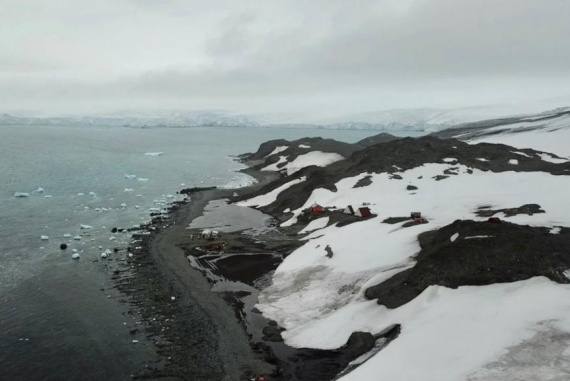

What exactly makes the construction of this seemingly ordinary building so difficult? Logistics. Until you step “on the field” or rather until you hit the ground, you can hardly understand what exactly means to construct in Antarctica. In those moments you’re thinking: „So what?! These are some 300 sq. m. on one floor, and we are easily going to build it! “, but things are far from simple. In order to be able to imagine the construction on Livingston Island, one should be aware that the mechanization there is extremely limited. Landing a weight of this nature off a ship, which is necessary for building construction, and its relocation to the site of future construction will inevitably require a great deal of effort. Due to the fact that we did not have our own transportation, all this would be possible thanks to the good will of the other Antarctic nations’ part and the relationships that have been built over the years of collaboration. Besides the difficult transportation, the task could be further complicated by the unpredictability of the meteorological conditions – one never knows when the wind would blow or when it would start raining and how long it would take.

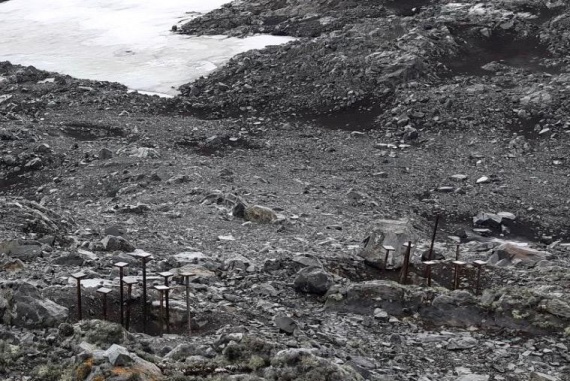
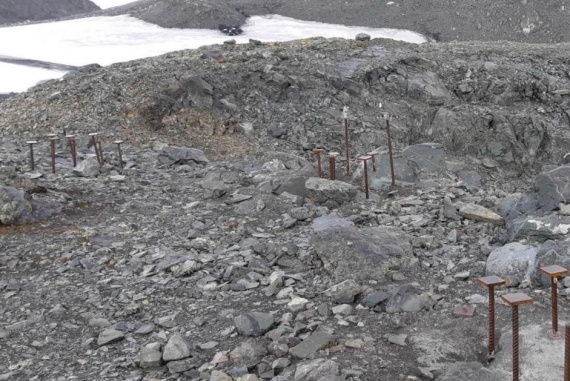
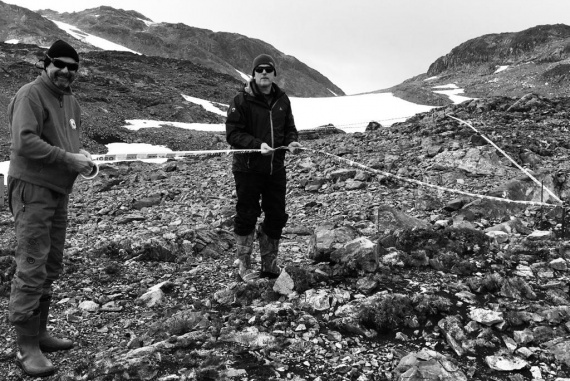

Despite all the difficulties described, the building construction began. It was traced by Eng. Borislav Alexandrov yet at the end of December, 2019. The building was intended to step on 32 pieces of single reinforced concrete foundations each of which was anchored to the rock with chemical anchors and anchoring single profile. For each single foundation, 9 anchors were provided. In other words, 288 anchors – all of them installed by the participants in the Expedition. The foundations of the building demands to be such because of the strong gusty wind – the maximum speed of which is 175km/h, as measured on Livingston Island.
I could not mention the names of everyone involved in this "operation" since there is no participant in the 28th Expedition who did not contribute to the process. But I would like to express my gratitude for the support of my Colleagues who designed this Project together with me: …